Run Web, Mobile, API, and Security Delivery Inside One Engineering Model
KODCUK helps teams ship web platforms, mobile applications, backend services, API integrations, and security-sensitive systems through one accountable delivery chain. Instead of splitting interface, service, data, integration, and operational decisions across disconnected vendors, we plan and execute them as one engineering system.
Layers we handle in one delivery line
We do not build only the visible web layer. Mobile experience, service design, integrations, data flow, security, and live operations are managed inside the same delivery plan.
Interface layer
Web products
Corporate sites, portals, dashboards, and conversion-facing surfaces built inside one product language.
Mobile experience
Mobile applications
iOS and Android flows are shaped together with APIs, notifications, and field usage constraints.
Service layer
Backend and APIs
Node.js, TypeScript, and Python are used to shape services, authorization flow, and external system integration.
Operations
Integrations and data
ERP, CRM, webhooks, and data movement are handled as part of the same delivery plan, not as afterthoughts.
Security
Security
Authorization, logging, hardening, monitoring, and Python-assisted automation remain inside the core scope.
Continuity
Live operations
Release, observability, incident signal, and post-launch technical ownership move in one operating loop.
Direct engineering ownership
Proposal, architecture, and delivery stay in one accountable technical chain.
Security by default
Authorization, telemetry, and auditability are defined as part of the initial design.
Systems built to last
We ship with handover, maintenance, and future iteration costs in mind.
The challenge is not only building software; it is managing the right layers together.
In many engagements, web, mobile, API, data, and security decisions are handled separately. That fragmented model slows delivery, increases integration risk, and creates operational overhead after launch. KODCUK treats the visible product surface and the technical system behind it as one delivery problem.
Delivery areas we manage as one team
Web interfaces, mobile products, backend services, integrations, automation flows, data movement, and security controls managed under one product architecture.
Web
Web platforms
We build corporate sites, portals, dashboards, and business-facing interfaces inside one product language.
Mobile
Mobile experience
iOS and Android flows are designed alongside APIs, notifications, and field usage scenarios.
API
Services and integrations
Backend services, webhooks, ERP connections, and data movement sit on the same delivery backbone.
Security
Security and continuity
Authorization, monitoring, logging, and live operational responsibility remain inside the core scope.
We choose technology through architecture risk, maintenance load, and live-system requirements, not as a badge list.
We do not start with what is fashionable. We start with data flow, handover quality, security boundaries, and release rhythm. Tooling follows those engineering decisions.
Decision axis
Architecture, security, and maintenance load
Delivery focus
Go-live and operational continuity
Technical outcome
Understandable, measurable, transferable systems
Architecture comes before screens
We frame requests through data flow, permission boundaries, and operational behavior before implementation starts.
Delivery must be measurable
Every phase is tied to an explicit risk reduction or a visible production outcome.
Systems must remain operable
If handover, maintenance, and incident response stay painful, the system is not actually finished.
Security stays in scope
Access control, logging, and data handling are designed early, not pushed into release week.
Selected tooling
Tooling is not the decision itself; it is the layer that supports the right architectural choice.
Next.js
TypeScript
PostgreSQL
Redis
Docker
Vercel
Node.js
AWS
Engineering decision areas
The blocks below show which technical layers are governed together inside a delivery. That makes the decision quality visible instead of turning the section into a stack list.
Scope
Application layer
Interface delivery is shaped together with performance, maintainability, and publishing discipline instead of being treated as screens only.
Next.js 16
SSR, routing, metadata, and cache control
React 19
Composable UI and cross-screen state logic
TypeScript
Type safety and safer refactoring
Tailwind CSS
Consistent UI language and fast interface iteration
Scope
Service and data layer
API contracts, data models, permission flow, and business logic remain part of the same service architecture together with data processing and integration automation.
Node.js
Application services, integrations, and domain flow
Python
Data processing jobs, integration automation, and security-oriented support services
PostgreSQL
Relational models, reporting, and query clarity
Redis / Upstash
Caching, queue, and rate-limit flows
REST / Webhooks
Safe system contracts and external data flow
Scope
Release and observability
Go-live, rollback behavior, telemetry, and user impact are designed inside the same delivery plan.
Vercel
Preview, production, and edge release flow
Docker
Consistent and portable service runtime
Analytics & Web Vitals
Real-user performance and behavior signals
Structured logging
Traceability for live operations
Scope
Security and quality gates
Security, validation, and release quality are built into the engineering rhythm instead of being deferred to the end.
RBAC
Role-based access and operational boundaries
Python security tooling
Scanning, enrichment, and security automation workflows
Audit trails
Traceability for sensitive actions
Security headers
Browser-side baseline hardening
Validation gates
Build, test, and release quality controls
Featured engineering work
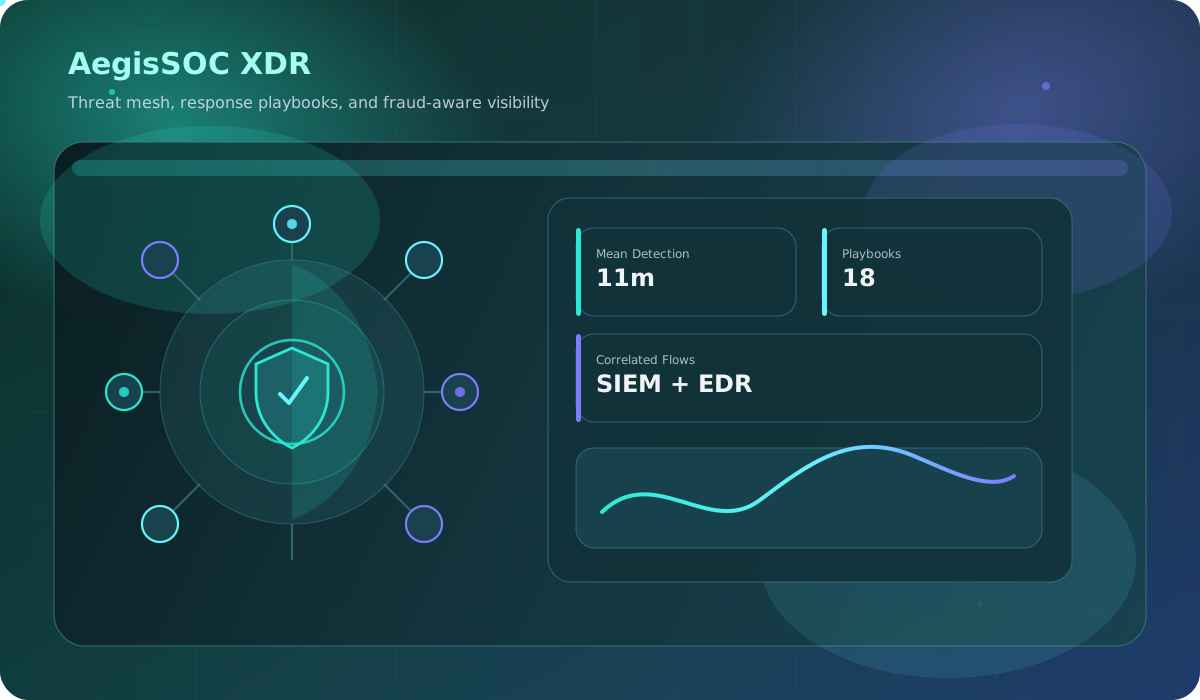
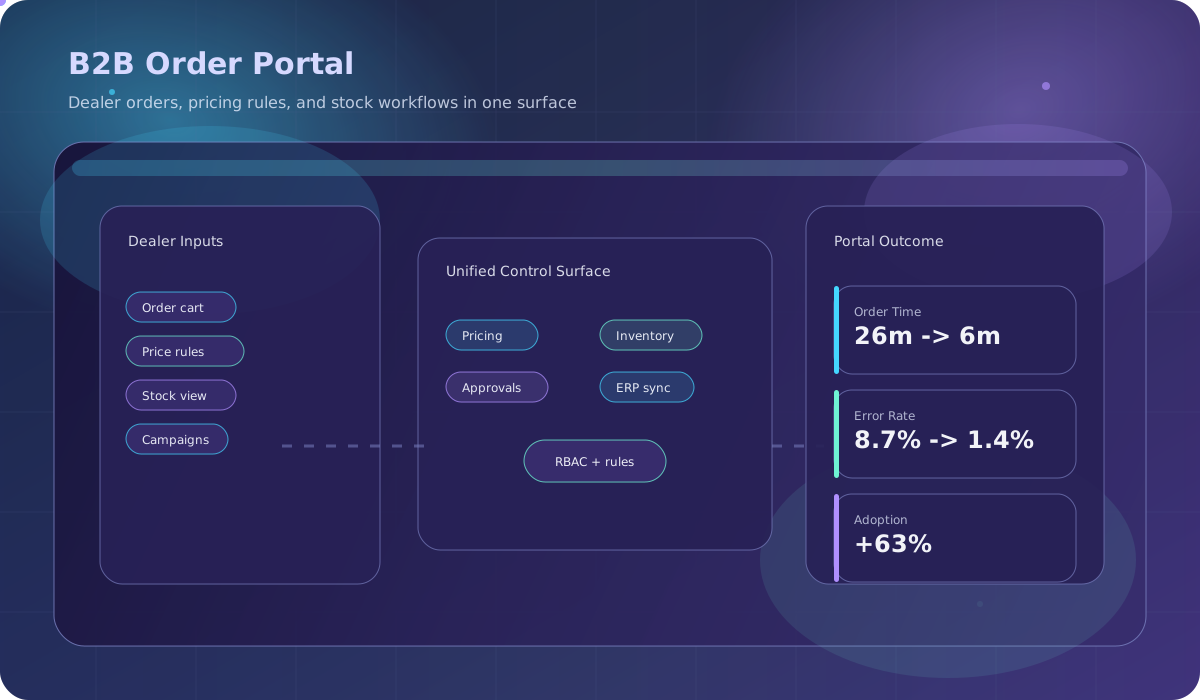
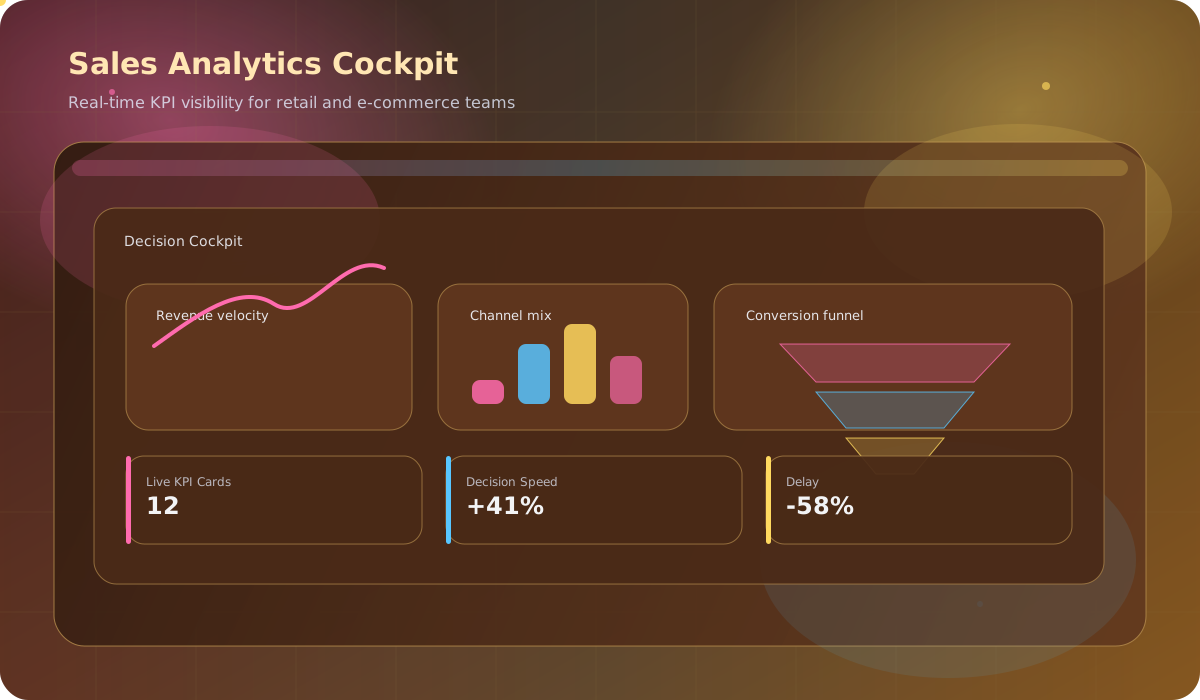
Real product delivery examples across environments with operational, integration, data, and security load.
How we move
Why teams work with KODCUK
01
Web, mobile, API, and security decisions are written into the same delivery plan
02
Sales, analysis, and delivery do not operate as disconnected teams
03
Integration load and live operational risk are accounted for in the first phase
04
Security, performance, and observability are designed in from the start
05
Systems are built to remain maintainable, readable, and transferable
06
Technical ownership continues after launch
Pages that explain how we actually engineer systems.
Making engineering decisions visible helps technical buyers evaluate fit faster. These pages clarify how we handle architecture, security, release discipline, and stack selection.
Web + API
Designed as one delivery backbone
Release-ready
Observability and rollback considered
Direct team
Decisions made with the engineering team
Engineering
We explain how delivery actually works
We document why the system is shaped the way it is and which technical risks are reduced early.
View pageArchitecture
System boundaries are deliberate
Data, permissions, observability, and release flow are designed together to keep the system maintainable.
View pageSecurity
Security stays in the delivery scope
Auth, auditability, and logging decisions are made before release pressure starts to distort the design.
View pageStack
Technology choice follows product reality
We evaluate tools around team capability, operational needs, and delivery speed instead of trends.
View pageEngineering notes and delivery guides
Engineering notes on web delivery, mobile systems, APIs, security, and operational architecture.
Planning a web, mobile, API, or security-heavy project?
Let us clarify the scope together and map which layers need to move inside the same delivery plan.